• Skip to main content
  • Skip to footer

Meagan Johnson - Generational Speaker

Solve Your Challenges and Bridge the Gap between Generations at Your Multigenerational Workforce

  • Home
  • About
  • Media
  • Virtual Meetings
  • Videos
  • Podcast
  • Testimonials
    • Clients
    • Testimonials
  • Blog
  • Contact

Meagan

Sep 21 2026

How to Lead a Multigenerational Workforce

Today’s workplace brings together people whose work experiences could not be more different.

Baby Boomers built their careers in one kind of workplace. Gen X entered another. Millennials came of age professionally during the 2008 financial crisis, and many members of Gen Z began their careers during or shortly after a global pandemic.

Those experiences matter.

They influence how we communicate, how we respond to leadership, what we expect from an employer, how we use technology, and even what we believe being a “good employee” looks like.

I recently spoke with Pete Mercer of Repertoire Magazine about these differences and how leaders can build stronger multigenerational teams. [Read the original Repertoire Magazine article]

One of the most important things I shared in that conversation is something I’ve seen repeatedly throughout my work with organizations: Generational differences don’t have to create division. When we understand where those differences come from, they can become an advantage.

Understanding Our Generational Signposts

I use the term generational signposts to describe the events, economic conditions, cultural shifts, and shared experiences that help shape a generation’s worldview.

Think about the difference between beginning your career during a period of economic stability and beginning it during the 2008 financial crisis. Or imagine entering the workforce when showing up at an office every morning was simply how work was done compared with starting your first professional job from your bedroom during COVID-19.

Those experiences leave a mark. They can influence our expectations about job security, communication, technology, leadership, loyalty, flexibility, and work-life boundaries.

The challenge begins when we assume our experience is the correct experience.

We see someone approaching work differently and think: “That’s not how you’re supposed to do it.“

But often, what we’re really saying is: “That’s not how I learned to do it.“

That distinction can completely change the way we lead.

Stop Comparing Younger Employees to Your Younger Self

One of the easiest generational traps to fall into is comparing someone from a younger generation to who you were at their age. It sounds reasonable, but the comparison doesn’t really work.

You may have been the same age, but you weren’t entering the same workforce.

Millennials entered their careers around the time of the 2008 financial crisis. Gen Z encountered COVID-19, remote work, rapid technological change, and tremendous economic uncertainty during some of their earliest professional experiences.

Their expectations around work developed in a very different environment. That doesn’t mean every Millennial or Gen Zer behaves the same way. Generations aren’t personality types, and they shouldn’t be treated as stereotypes. They do, however, give us useful context for understanding why someone might approach work differently than we do.

Every Generation Brings Something Valuable to the Table

The goal isn’t to decide which generation has the better approach… It’s to recognize what each perspective can contribute.

Younger employees often arrive with fewer assumptions about how something has to be done. They’re comfortable questioning an existing process and asking: “Why are we doing it this way?“

That can be enormously valuable.

Having grown up surrounded by rapidly changing technology, many younger employees are comfortable experimenting with new tools, automating processes, and looking for more efficient ways to accomplish something. Sometimes they see a solution that someone who has been doing the job for twenty years simply doesn’t see anymore.

But experience has tremendous value, too. An experienced employee may hear that new idea and immediately recognize consequences that aren’t obvious at first.

Maybe the proposed change increases costs. Maybe it creates a safety concern. Maybe a process exists because the organization learned a painful lesson ten years ago.

This is where multigenerational teams can become incredibly powerful.

One person asks: “Why can’t we change this?”

Another says: “Here’s what we’ve learned from doing this for twenty years.”

Put those perspectives together, and you can often create something better than either person would have developed alone.

Make the Unwritten Rules Written

Many workplace conflicts aren’t actually about generations… They’re about expectations that were never communicated.

Every organization has unwritten rules:

  • How quickly should someone respond to an email?
  • What does “urgent” actually mean?
  • Should you call, text, email, or send a message through another platform?
  • When should someone handle something independently, and when should they ask for help?
  • What does good communication look like here?

Long-time employees may understand these expectations instinctively because they’ve spent years inside the organization, but a newer employee doesn’t have that context.

And when expectations aren’t communicated, we tend to fill in the blanks with assumptions. Instead of assuming employees should “just know,” leaders can make expectations explicit.

  • Talk about communication preferences.
  • Define what urgency means.
  • Explain why certain processes exist.
  • Discuss how and when feedback is given.

The clearer you make the environment, the less room there is for unnecessary generational friction.

Don’t Assume Younger Employees Only Want Technology

There’s another assumption I hear frequently: younger generations would rather communicate through technology than talk to another human being.

It’s not that simple.

Many younger employees, particularly those whose first professional experiences happened during COVID-19, missed opportunities previous generations took for granted.

They didn’t always have the spontaneous conversations in hallways. They didn’t sit beside experienced colleagues and overhear how they handled a difficult customer. They didn’t necessarily have lunches, meetings, conferences, and informal conversations where professional relationships naturally developed.

Technology may feel comfortable to them, but that doesn’t mean human connection isn’t important.

In fact, many younger employees deeply value face-to-face interaction and mentorship. They simply may have had fewer opportunities to develop those skills in a professional environment.

That’s something leaders can help create.

Feedback Means Different Things to Different Generations

Early in my own corporate career, hearing from my manager usually meant one thing to me: I had done something wrong. So frequent feedback didn’t necessarily feel reassuring.

Today, working with younger generations has taught me that silence can communicate something entirely different to them.

Some younger employees expect more frequent feedback. When they don’t receive it, they may wonder whether something is wrong, whether their work is valued, or whether they’re succeeding.

Neither expectation is inherently right or wrong. They’re simply different.

A good leader recognizes that motivating and communicating with people isn’t a one-size-fits-all exercise. Sometimes leadership means adjusting the way we communicate so another person has what they need to succeed.

Trade Policies for Standards

One of the most powerful shifts organizations can make is moving the conversation away from rules and toward standards.

Older generations were often taught: “This is the policy. Follow it.” But younger generations are much more likely to ask: “Why?” That question can frustrate leaders, but it can also be useful. Instead of immediately defending the rule, ask what the rule is ultimately designed to accomplish.

What is the standard we’re trying to uphold? Maybe it’s exceptional customer service. Maybe it’s patient safety. Maybe it’s accuracy. Maybe it’s responsiveness. Maybe it’s producing excellent work on time.

When everyone understands the standard, there may be multiple ways to achieve it. That’s where innovation becomes possible without sacrificing quality.

The Goal Isn’t to Make Everyone Work the Same Way

Leading a multigenerational workforce isn’t about getting Baby Boomers, Gen X, Millennials, and Gen Z to think alike. They won’t. And that’s not necessarily something we should want.

The opportunity is to create an environment where different experiences strengthen the organization rather than divide it.

That starts with curiosity. Instead of: “Why don’t they do this the way I do?” Try: What is influencing the way they’re approaching this?“

Instead of assuming someone isn’t committed because they establish different boundaries around work, understand what shaped those expectations. Instead of dismissing a long-standing process as outdated, ask why it exists. And instead of expecting people to somehow understand the unwritten rules of your organization, talk about them. Because ultimately, most people come to work wanting to succeed.

The leader’s job isn’t to make everyone approach that success in the same way… It’s to create an environment where people from different generations can communicate, contribute their strengths, learn from one another, and do excellent work together.


Continue the Conversation

I recently discussed these ideas with Pete Mercer for Repertoire Magazine, including how generational signposts influence the workplace, the strengths different generations bring to their teams, and what leaders can do to reduce unnecessary generational friction.

Read Pete Mercer’s original article, “Navigating Generational Differences in the Workplace,” in Repertoire Magazine

Written by Meagan · Categorized: Generational Challenges, Generational Employee Engagement, Millennials in the Workplace, Understanding Generations in the Workplace

Jun 23 2026

America Turns 250: How to Join the Ultimate Nationwide Block Party

Did someone say “Block Party”?

As our final days of June are upon us, we are officially standing on the doorstep of a historic July. The United States is hitting an ultimate milestone this year: its 250th birthday! Reaching our Semiquincentennial is a massive moment to pause, reflect on a 250-year-old journey, and look ahead toward the future we want to create for our next generations & beyond. 

This year, the party isn’t confined to a single city or stadium. The entire country is coming together for America’s Block Party on July 3 and 4, a sea-to-shining-sea celebration designed to unite local communities, neighborhoods, and backyards nationwide.

block party

One Big Backyard: How Tech Bridges the Distance

Two and a half centuries ago, a “synchronized” national party was a logistical impossibility. Back in 1776, celebrating meant gathering in public squares to hear the Declaration of Independence read aloud by town criers, ringing church bells, and cheering around local bonfires. News traveled by horseback, and communities celebrated in isolated pockets weeks apart.

Fast forward to today, and modern technology has completely rewritten the playbook for how we connect. It transforms our massive country into one giant, synchronized backyard barbecue. This year, America250 has teamed up with iHeartMedia as the official audio partner for the milestone, using the power of digital streaming to build a unified national listening experience.

No matter where you are traveling, camping, or firing up the grill this weekend, staying connected to the national vibe is seamless:

  • Stream from Anywhere: Through the iHeartRadio app, the festive sounds, live concert audio, and energy of the national celebration will livestream directly to your phone, portable speaker, or car dashboard.
  • Sync Your Local Sky: Whether your neighborhood is putting on a classic firework display or a high-tech, synchronized drone light show, you can queue up the official soundtrack in real time to match the visual magic.
  • Bridge the Distance: From group chats sharing photos of local parades to families video-calling across state lines, technology connects us so that nobody has to celebrate alone.

A New Tradition: The Giving 4th

Because an unforgettable birthday party is always about more than just the fireworks, America’s Block Party is introducing a beautiful new element to our summer tradition: Giving 4th. This nationwide initiative aims to transform Independence Day into a massive moment of charitable impact and community support. Through the America250 mobile app, we can easily find ways to give back, donate to causes we care about, and help break the typical mid-year “summer slump” that local charities experience.

So, grab your favorite device, download the iHeartRadio app, and invite a neighbor over. Cheers to history and America’s 250! 

Written by Meagan · Categorized: Generational Employee Engagement

May 15 2026

Closing the Generation Gap

One of society’s (or maybe just the internet’s) favorite activities is pitting generations against one another. Baby Boomers vs. Millennials, Gen X vs. Gen Z, and so on. The differences between the groups provide endless fodder for arguments about age, attitude, and work ethic.

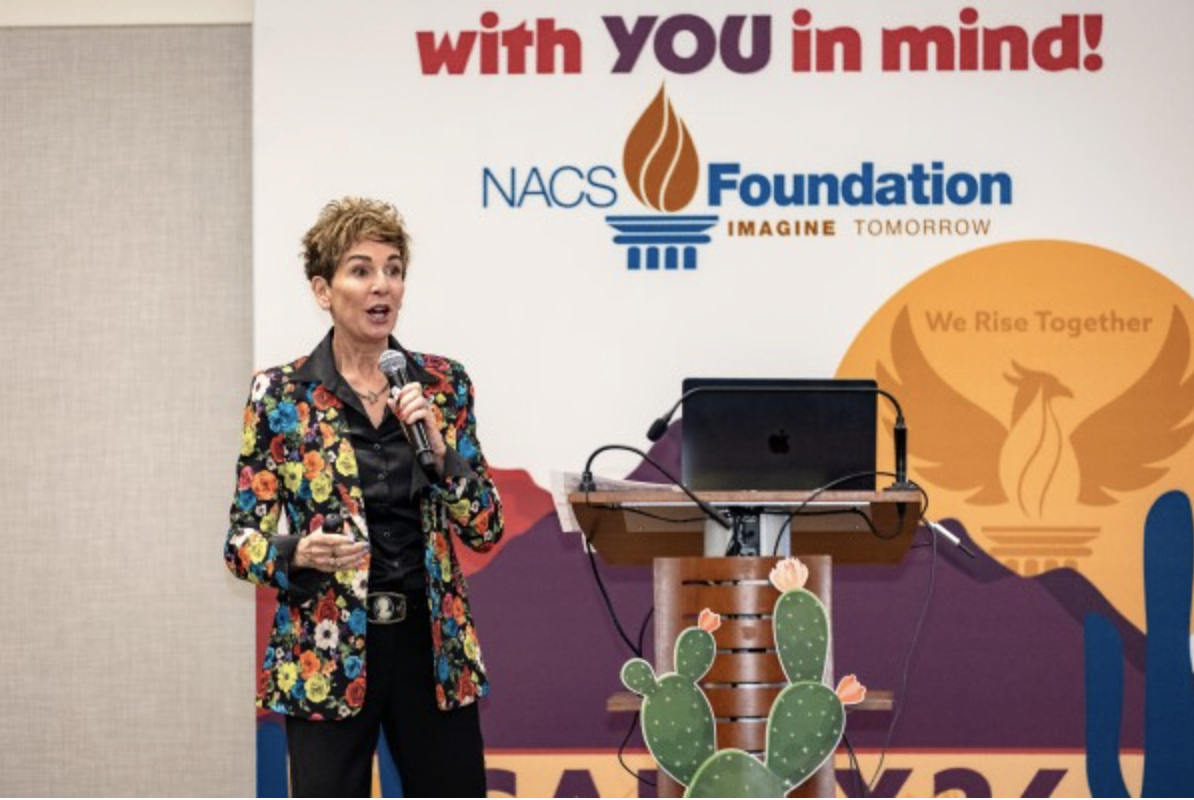
At the most recent CAMEX event, held in Phoenix, AZ, earlier this year, there was even a session about how the various generations interact. Meagan Johnson discussed how to “Zap the Generation Gap!” That concept is being explored on several fronts.

Generation Gap
Author and presenter Meagan Johnson talked about mitigating the challenges posed in managing a multi-generational store staff.

Zapping the Generation Gap

It boils down to understanding. Knowing how a given generation views and interacts with the world can help campus stores (and other operations) get the most out of their employees.
According to a report from Hanover Research, “Teenagers and young adults have different expectations about higher education than previous generations.”

“Generation Z is diverse, altruistic, adept with AI and technology, and optimistic about their personal futures,” the report continues. “Yet they are also cost sensitive, debt averse, and more skeptical than ever about the value of a college degree.”

That skepticism seems to be shared by a broader group. According to a Gallup report, only 35% of Americans view a college education as “very important.” Just seven years ago, that figure sat at 53%. 

“To effectively engage Gen Z students and begin outreach to Gen Alpha, it’s more critical than ever for higher education leaders to adapt their outreach, recruitment, and retention efforts to meet these students’ changing needs, priorities, and expectations,” according to Hannover Research.

There are more than 70 million Gen Z Americans, those born between 1997 and 2012. Hanover Research offers nine tips for institutions interested in appealing to that age group.

The organization’s suggestions include:

•    Highlighting accelerated programs, flexible start dates, and experiential learning.
•    Adapting teaching methods to Gen Z learning styles
•    Provide training and support on technology, software, and devices.
•    Increase faculty and staff accessibility to students through multiple communication channels.

More tools and strategies can be found in the Hanover Research report. 

Written by Meagan · Categorized: Generational Challenges, Understanding Generations in the Workplace

Mar 10 2026

4 Critical Elements to Consider When Communicating

The 4 critical elements and the surge of energy were felt all the way in Hershey, PA… and it wasn’t just the sugar rush from the chocolate – it was the buzz following Meagan Johnson’s session at the 2026 PenSPRA Annual Symposium!

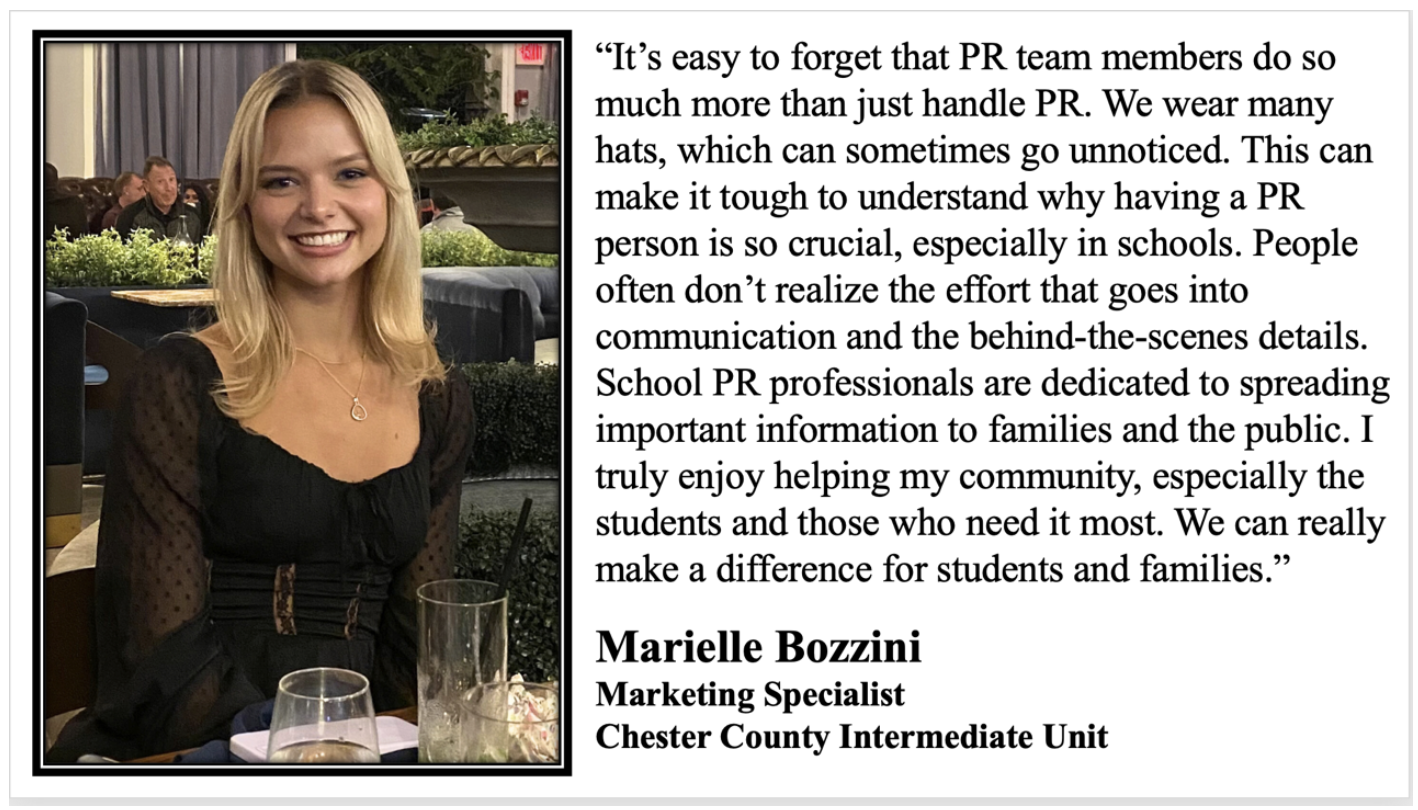
Before every event, Meagan connects with multiple employees to understand company culture, evolving needs, and so much more. In this case, Marielle Bozzini was one of the employees Meagan connected with before the symposium! This personal touch allowed her to deliver a presentation that was as relevant as it was high-energy. As one attendee noted, her “poignant insights on generational signposts” brought a level of excellence that resonated deeply with school communication leaders across Pennsylvania.

4 Critical Elements

The 4 Critical Elements

A big highlight was sharing 4 elements to consider when communicating: Tone, Length, Platform, and Context. She challenged the audience to start “tuning” their communication to the recipient. Before you hit send, consider these four elements… 

1. Tone: The Professional Vibe

Research shows that Boomers typically value a Formal approach. As the dial turns, we move toward Direct for Gen X, Collaborative for Millennials, and Conversational for Gen Z. For younger staff, a tone that is too stiff can feel like a “trip to the principal’s office” rather than a helpful check-in.

2. Length: Finding the Sweet Spot

In the world of school communications, brevity is often a struggle. Meagan points out that while Boomers appreciate a detailed background, Gen X wants it Concise. Millennials look for a Balanced approach, while Gen Z – the masters of the “quick take” – prefers things to be kept Short.

3. Platform: Meeting Them Where They Are

The medium is the message! Meagan noted that while Boomers still value Phone/Email, Gen X lives in the Email inbox. Millennials have pioneered Collaboration Tools (like Slack), while Gen Z moves fastest on Messaging Apps.

4. Context: The “Why”

Finally, why does this message matter?

Boomers want the Full Background of a project. Gen X needs a Brief Reason. Millennials are Purpose-Driven, and Gen Z appreciates a Simple Explanation that cuts through the noise.

So, the bottom line is…

Adjust the 4 Critical Elements

When we adjust these four elements, we stop “talking at” each other and start “connecting with” each other. Before your next message, ask yourself: Am I using my preferred communication method, or theirs?

Written by Meagan · Categorized: Generation X, Generation Z, Generational Challenges, Millennials in the Workplace

Feb 23 2026

Mentorship, Purpose, and Connection: What the Multigenerational Workforce Is Asking For Now

The workplace has changed – dramatically. And while each generation experiences that change differently, one thing is clear: people are asking for more connection, not less.

After years of disruption, remote work experiments, and shifting expectations, the multigenerational workforce isn’t broken. It’s recalibrating.

connection

Mentorship Isn’t Optional – It’s Essential

One of the clearest signals across generations is the desire for guidance and growth. Gen Z has been especially vocal about wanting mentorship, but this isn’t a “young employee issue.” It’s a human one.

Mentorship helps people feel seen. It builds trust. It accelerates learning. And it doesn’t have to look the same for everyone.

Organizations are finding success by expanding what mentorship can be:

  • onboarding mentors for new hires
  • group mentoring circles
  • virtual or cross-location mentorship
  • reverse mentoring that flows both ways

The goal isn’t perfection – it’s intentional connection.

Purpose Isn’t Anti-Pay

There’s a misconception that talking about purpose means ignoring compensation. That’s not what’s happening. Pay still matters – to every generation.

What’s changed is that many employees, especially those who entered the workforce during uncertain times, want to understand why their work matters. Purpose gives context. It helps people stay engaged, motivated, and invested.

Organizations that connect daily work to a broader mission tend to see stronger performance and lower turnover. Purpose isn’t a perk – it’s a stabilizer.

Different Generations, Shared Needs

Here’s the part that often gets overlooked: while generations may express needs differently, the core desires are remarkably similar.

People want:

  • to feel valued
  • to grow
  • to belong
  • to contribute meaningfully

The difference isn’t what people want – it’s how they ask for it. When leaders manage by stereotype, they miss opportunities. When they lead with curiosity, they invite collaboration.

Better Questions, Better Outcomes

Instead of assuming what motivates someone, try asking:

  • How do you prefer to learn or receive feedback?
  • What makes a workday feel meaningful to you?
  • What kind of support helps you do your best work?

These questions don’t require generational expertise. They require attention.

Moving Forward Together

The future of work isn’t about choosing one generation’s preferences over another’s. It’s about building environments where experience, adaptability, and perspective work together.

When organizations invest in mentorship, honor purpose, and create space for connection, everyone benefits. And that’s not a generational trend – it’s good leadership.

Written by Meagan · Categorized: Generational Challenges, Generational Employee Engagement, Understanding Generations in the Workplace

  • Page 1
  • Page 2
  • Page 3
  • Interim pages omitted …
  • Page 23
  • Go to Next Page »

Footer

Connect with Meagan

  • Email
  • Facebook
  • LinkedIn
  • Twitter
  • YouTube

Get a Generational Jump Start, News and Updates with MEAGAN’S MONTHLY E-ZINE

Sign Up Now

  • Home
  • About
  • Media
  • Virtual Meetings
  • Videos
  • Podcast
  • Testimonials
  • Blog
  • Contact
Copyright ©2026 Meagan Johnson. All Rights Reserved | Privacy Policy | Site Map